
Plr Products Private: Build a Flexible Digital Asset Library
PLR Products and Private Label Rights resources give entrepreneurs a practical way to create valuable content, launch offers, and strengthen a brand without producing every asset from the beginning. A typical PLR collection may include ebooks, guides, workbooks, articles, email sequences, social media captions, checklists, templates, courses, graphics, audio files, or video scripts. The purchaser receives defined rights to adapt, rebrand, and use those materials according to the license terms.
This model is persuasive because it combines efficiency with creative control. Instead of spending weeks researching, outlining, writing, editing, and formatting a product, you can begin with a structured foundation. You then add your experience, examples, opinions, design preferences, and audience insights. The result can become a useful lead magnet, paid product, membership resource, coaching supplement, or campaign asset that reflects your business.
PLR does not mean instant success, and it is not a substitute for originality. Its value comes from intelligent transformation. The strongest users treat PLR as raw material rather than a finished promise. They study the license, identify gaps, revise the substance, improve presentation, and position the final resource for a specific audience. This approach saves time while preserving credibility.
What Private Label Rights Mean
Private Label Rights describe permission to modify and use licensed content under conditions established by the creator or rights holder. Those conditions vary significantly. One license might permit editing, branding, selling, and including the material inside a larger product. Another might restrict resale, prohibit sharing source files, or require that the content remain free.
Therefore, the phrase PLR should never be interpreted as unlimited ownership. Before downloading or publishing anything, read the license carefully. Look for rules concerning attribution, copyright notices, resale rights, giveaway rights, membership use, pricing, transfer, file access, and the number of buyers allowed. Keep a copy of the license with your project records so that future decisions remain informed.
A clear license protects both the buyer and the original creator. It defines what may be changed, where the content may appear, and how it may be distributed. When terms are uncertain, contact the seller for clarification. Responsible use reduces legal risk and supports a professional reputation.
PLR Compared With Other Rights
Resell Rights generally allow you to sell a product but may prevent you from changing it or transferring resale rights to customers. Master Resell Rights often allow customers to resell the product, though exact permissions differ. Personal Use Rights typically permit learning or private use but not commercial distribution. Private Label Rights usually offer broader editing and branding permission, yet the details still depend on the individual agreement.

Copyright ownership is another matter. Buying a license does not automatically make you the copyright owner. You receive defined usage permissions. If you want exclusive ownership, commissioned work, or a copyright transfer, seek a separate written arrangement. Understanding this distinction prevents misleading claims and helps you describe your offer accurately.
Why Businesses Use PLR Products
The main advantage is speed. Content marketing requires consistent publication, but a small business owner may have limited time, staff, or budget. A well-organized PLR asset provides a starting structure, helping you move from idea to usable draft more quickly. You can devote saved time to research, customer conversations, sales strategy, and refinement.
PLR can also reduce production costs. Hiring specialists for every article, workbook, lesson, and design may be unrealistic during an early growth stage. A licensed resource can support a modest budget while leaving room for investment in proofreading, branding, specialized expertise, and promotion. It does not eliminate professional work; it redirects effort toward the areas where your contribution creates the greatest difference.
Another benefit is consistency. A collection designed around one topic can help a brand maintain an educational rhythm across a blog, newsletter, social channels, and customer journey. For example, a guide can become a webinar outline, a checklist, five email lessons, several short posts, and a coaching discussion. One source can support multiple formats without requiring disconnected planning.
PLR is especially useful for testing ideas. Before building an extensive course, you can adapt a licensed mini guide into a workshop and observe questions, completion rates, and buying behavior. Feedback reveals which concepts deserve deeper investment. This lowers the cost of experimentation and encourages evidence based product development.
Turning PLR Into Original Value
Start With Audience Research
Do not begin by changing colors or inserting a logo. Begin by defining the reader. Identify their goals, experience level, frustrations, vocabulary, objections, and desired result. A general productivity ebook may serve students, freelancers, or managers, but each audience needs different examples, priorities, and calls to action.

Review the original material critically. Mark statements that are outdated, unsupported, repetitive, vague, or unrelated to your customers. Compare claims with current industry guidance and reliable sources. Add practical details that help readers act: procedures, decision rules, sample schedules, worksheets, calculations, or realistic case studies.
Rewrite the Substance
Meaningful rewriting goes beyond replacing a few words. Reorganize the sequence, strengthen explanations, add original frameworks, and remove material that does not fit your positioning. Use your own teaching voice. Explain why each step matters, when it may fail, and how readers can adapt it to different circumstances.
Add firsthand knowledge wherever possible. A short story about a mistake, a comparison of two methods, or an annotated example can make generic information memorable. If you lack experience in a technical or regulated area, consult qualified specialists and avoid presenting uncertain claims as professional advice.
Improve Design and Usability
A useful product should be easy to navigate. Create a clear contents page, descriptive headings, readable typography, generous spacing, and consistent visual cues. Break dense passages into tables, lists, diagrams, or exercises when those formats improve understanding. Check the final file on phones, tablets, and desktop screens.
Usability also involves accessibility. Use sufficient color contrast, meaningful link text, descriptive image alternatives, logical heading levels, and text that remains readable when enlarged. Accessible design serves more customers and demonstrates care.
Build a Complete Customer Experience
A standalone file is only one part of an offer. Add a welcome message, instructions, implementation plan, progress tracker, or companion checklist. Explain what the buyer will achieve, how long the process may take, and what support is available. Consider adding a private community, office hours, templates, or updates if those features fit your business model.

A polished customer experience can transform ordinary source material into a compelling solution. Buyers do not purchase pages merely because they exist; they purchase clarity, confidence, convenience, and a credible path toward a desired outcome.
Common PLR Formats and Applications
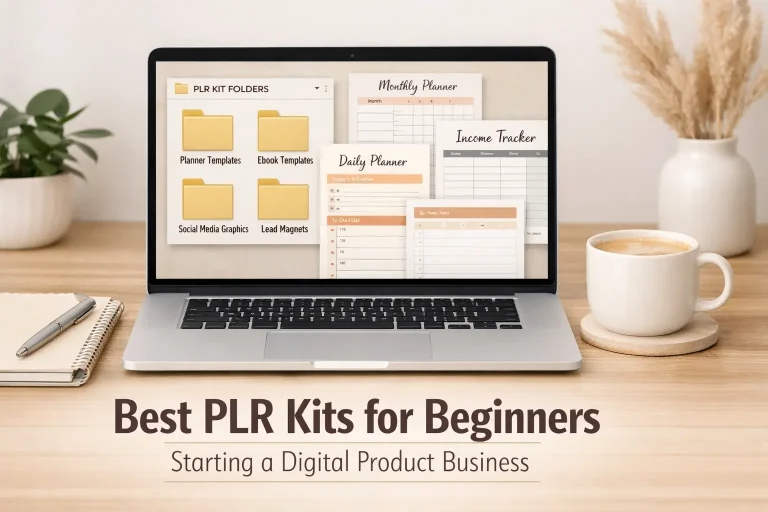
Ebooks and reports can educate prospects, support a sales funnel, or become low priced introductory products. Workbooks and planners encourage action because they turn concepts into written decisions. Email sequences help maintain communication after a signup or purchase. Social content provides publishing prompts, but every post should be adapted to your brand and current context.
Course materials can supply lesson structures, activity ideas, quizzes, and discussion prompts. Coaches may use them as session preparation, while consultants may convert them into client handouts. Templates can save customers repeated effort, particularly in areas such as planning, budgeting, onboarding, content scheduling, and project management.
Audio and video assets require special attention. Confirm whether the license permits editing, voice replacement, commercial publication, or platform distribution. If the material includes music, photographs, fonts, or third party footage, verify those permissions separately. A license for one component may not cover every embedded element.
Examples of Strategic Repurposing
A small business consultant could transform a PLR report about planning into a branded diagnostic quiz, a workshop deck, a five day email challenge, and a client implementation workbook. A fitness educator could adapt general wellness content into beginner lessons, habit trackers, grocery planning pages, and short educational videos, while consulting appropriate professionals for health claims.
A career adviser might convert interview guidance into a resume checklist, practice scripts, a downloadable scorecard, and a webinar. In each example, transformation includes audience research, fresh instruction, thoughtful formatting, and a clear next step. Simply uploading the same file under several product names would provide little additional value.

Licensing, Ethics, and Quality Control
Protect Your Business
Maintain a rights register for every asset. Record the seller, purchase date, license version, permitted uses, restrictions, source location, and changes made. If a team member edits the resource, provide that person with the relevant rules. Organized documentation makes audits and updates easier.
Do not assume that a marketplace’s description replaces the actual license. Marketing language may use broad phrases such as “sell anywhere,” while the legal document contains important limitations. Give special attention to claims about exclusivity. If many customers receive the same source file, you should not imply that your underlying content is unique unless you have genuinely added distinctive value.
Protect Your Audience
Proofread every page and check links, facts, statistics, dates, examples, and references. Remove accidental references to another brand, author, website, or audience. Confirm that testimonials, photographs, illustrations, and quotations can be used commercially. Replace placeholders and review metadata that may reveal the original creator.
Avoid deceptive scarcity, unsupported guarantees, and inflated expertise. A persuasive product should explain realistic benefits rather than promise results that depend on circumstances outside your control. Ethical marketing may grow more slowly than aggressive promotion, but it builds durable trust, repeat purchases, and referrals.
Measure Performance
Set a specific objective for the adapted product. You might seek email subscribers, course enrollments, consultation bookings, product sales, or improved customer completion. Track relevant measures such as conversion rate, download rate, lesson progress, refund requests, replies, and support questions.
Use feedback to improve the asset. If readers repeatedly misunderstand one section, revise its explanation. If customers request a missing template, add it. If a chapter receives little attention, shorten it or move it. Continuous improvement is one of the clearest ways to make licensed material genuinely yours.
Frequently Asked Questions
Can I sell PLR products immediately?
You may be able to sell them immediately, but immediate resale is rarely the strongest strategy. First review the license, inspect quality, remove irrelevant material, and add original value. A fast upload can create duplicate content, weak customer satisfaction, and avoidable legal problems. Adaptation improves differentiation and usefulness.
Can I claim copyright?
Not automatically. You may claim copyright only in original additions or where a valid agreement transfers copyright to you. Licensed portions remain subject to the original terms. Never represent shared source material as exclusively created by your business unless your legal rights support that statement.
May I give PLR away?
That depends on the license. Some licenses permit giveaways, lead magnets, bonuses, or membership access; others permit only paid sales. Read each category separately because permission to sell does not necessarily include permission to distribute freely. Document the relevant clause before launching a campaign.
How much should I change?
There is no universal percentage. Change enough to make the resource accurate, audience specific, distinctive, and aligned with your promise. Substantive improvement might include a new structure, original examples, updated research, exercises, illustrations, commentary, and implementation support. Cosmetic changes alone may not create meaningful value.
Is PLR suitable for beginners?
Yes, provided beginners learn basic licensing, editing, research, and marketing practices. PLR can teach product structure and reduce the intimidation of starting from a blank page. However, beginners should not skip proofreading, compliance checks, or audience research. A smaller, carefully improved product is better than a large, careless collection.
Can several businesses sell the same PLR?
Usually, yes, unless the license grants exclusivity. That possibility makes positioning essential. Build distinction through a narrow audience, stronger teaching, original stories, better design, useful tools, specialized support, and a memorable customer experience. Your competitive advantage should come from transformation, not from pretending the source is exclusive.
What if the content contains errors?
You are responsible for reviewing material before publication. Verify facts with credible sources, update obsolete recommendations, and obtain expert review when the subject involves law, medicine, finance, safety, or regulated claims. Include appropriate disclaimers, but remember that a disclaimer does not excuse negligent or misleading content.
Can I use PLR for client work?
Sometimes. Check whether the license permits client delivery, transfer, agency use, or work performed on behalf of another organization. Some agreements allow the client to receive a finished deliverable but prohibit giving the client editable source files. Clarify ownership and usage rights in your client contract.
A Practical Launch Workflow
Begin by selecting one audience and one measurable outcome. Purchase material from a provider whose license is clear and whose sample quality meets your standards. Archive the files and terms. Next, perform a content audit, separating useful sections from outdated or unsuitable ones.
Create a new outline based on customer needs rather than the original chapter order. Rewrite the core lessons, add examples, and develop exercises or templates. Apply brand design only after the substance is sound. Then proofread, fact check, test links, and review the product on multiple devices.
Ask a small group of representative users to complete the resource. Observe where they pause, become confused, or ask for clarification. Make revisions before public release. Prepare a sales page that identifies the audience, problem, contents, practical benefits, limitations, delivery method, and support. Avoid vague promises.
After launch, monitor behavior and feedback. Update the product when information changes. Keep a changelog and communicate meaningful revisions to customers. This workflow turns PLR from a shortcut into a disciplined product development system.
Conclusion
PLR Products and Private Label Rights resources offer an efficient foundation for entrepreneurs who want to teach, sell, communicate, and serve customers more consistently. Their real advantage is not the ability to publish borrowed text quickly. It is the opportunity to combine a structured starting point with your research, judgment, voice, design, and practical support.
Success depends on four habits: understand the license, study the audience, transform the substance, and protect quality. When those habits guide your process, a generic asset can become a focused solution with genuine commercial and educational value. You can test ideas more affordably, create helpful products faster, and concentrate scarce resources on the elements customers notice most.
Use PLR responsibly. Verify permissions, respect creators, update information, disclose limitations when appropriate, and never promise more than the product can deliver. Then let your expertise shape the final experience. The strongest private label products are not hidden copies; they are thoughtfully rebuilt resources that help a clearly defined audience take confident action.