
AI PLR Products: Create, Sell, and Scale Digital Assets
AI PLR products are ready-made digital resources that a buyer may legally rebrand, customize, and sell under permitted license terms. They can include ebooks, prompt libraries, worksheets, email sequences, social media captions, video scripts, course materials, planners, templates, and software documentation. Their appeal is practical: instead of beginning with a blank page, a creator receives a structured asset that can be improved for a specific audience.
The strongest opportunity is not selling untouched, generic material. It is transforming a broad artificial intelligence resource into a useful, accurate, distinctive product. That process requires thoughtful editing, fact checking, design, licensing discipline, and customer-focused positioning. When handled well, PLR can shorten production time while leaving room for expertise, branding, and recurring revenue.
This guide explains what AI PLR products are, how to create or acquire them, how to evaluate quality, how to sell them responsibly, and how to build a scalable product system without sacrificing trust.
What AI PLR Products Include
Private label rights, commonly called PLR, describe permission granted by a rights holder. The exact permission varies by license. Some licenses allow editing, branding, and resale. Others permit only personal use, limit the number of customers, prohibit redistribution of source files, or require specific attribution. Therefore, the license is part of the product, not an administrative detail.
AI PLR products may be generated partly or entirely with artificial intelligence tools, but AI involvement does not automatically make an asset valuable. A buyer pays for relevance, clarity, convenience, presentation, and permission to use the material. A collection of repetitive prompts or poorly checked paragraphs has little commercial strength, even if it is large.

Common formats include:
- Short guides addressing a narrow problem
- Prompt packs organized by profession or task
- Editable checklists, workbooks, and planners
- Newsletter, blog, and social media content bundles
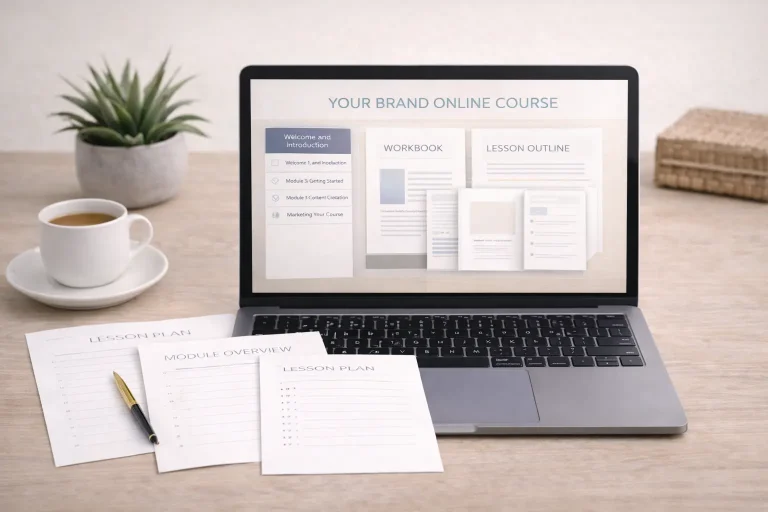
- Mini courses with lessons, exercises, and assessments
- Sales page, product description, and email templates
- Spreadsheet tools, calculators, and workflow documents
- Graphics, presentation slides, and video scripts
The best format depends on the customer’s desired outcome. A freelancer may want client-ready templates, while a coach may want exercises that support a structured program. Begin with the buyer’s job to be done rather than with the capabilities of a particular AI tool.
Why Buyers Choose PLR
PLR saves time, but convenience alone does not guarantee sales. Buyers usually choose these products because they want to launch faster, maintain consistent publishing, test a niche, or provide additional value to an existing audience. A well-made asset can serve as a foundation rather than a finished business.
For example, a personal trainer might purchase a nutrition planning workbook, revise it for a particular client group, add professional commentary, and use it as a lead magnet or paid resource. A marketing consultant might adapt an email sequence for local service businesses. In both cases, the commercial value comes from adaptation and context.
PLR also lowers experimentation costs. A new seller can test a topic without investing weeks in a large course. If customers respond positively, the seller can develop a more advanced product, membership, coaching offer, or service around that demand. If the response is weak, the financial and time loss may be lower than with a fully custom launch.

However, buyers are increasingly able to recognize generic material. A product must therefore provide a clear promise, logical organization, editable files, and guidance explaining how to use the contents. Practical implementation often distinguishes a modest asset from a product customers recommend.
Creating a High-Quality AI PLR Product
Choose a Specific Audience
Start by defining one audience and one problem. “AI prompts for business” is broad and difficult to position. “Customer-support prompts for independent online shops” is more focused. Specificity improves the examples, terminology, workflow, and sales message.
Research the audience through legitimate observation: read public discussions, review existing products, examine recurring questions, and identify tasks that consume time. Do not copy competitors or reproduce protected material. Instead, look for unmet needs, confusing explanations, or opportunities to organize information more clearly.
Design the Outcome
State what the customer should be able to do after using the product. The outcome might be creating a weekly content plan, drafting a welcome sequence, preparing a project brief, or organizing client onboarding. Then map the shortest useful path to that outcome.
A prompt pack, for instance, should not be a random list. It may include an input checklist, prompt categories, examples, revision prompts, quality checks, and instructions for adapting outputs. A workbook should include space for decisions, not merely inspirational questions.
Use AI as an Assistant
Artificial intelligence can help brainstorm structures, generate alternatives, summarize supplied notes, and identify gaps. It should not replace judgment. Review every factual statement, instruction, example, and claim. Check whether the output is suitable for the intended audience and whether it accidentally includes stereotypes, invented citations, outdated information, or confidential-looking data.
For specialized subjects such as health, law, finance, education, or safety, apply a higher review standard. Clearly distinguish general information from professional advice, avoid unsupported promises, and encourage readers to consult qualified authorities when decisions carry significant consequences.
Add Human Value
Human contribution makes a PLR product more useful and more defensible. Add a distinctive framework, practical examples, decision trees, troubleshooting notes, worksheets, or a concise implementation plan. Explain why each component exists and when it should be used.
Design also matters. Consistent headings, readable typography, accessible contrast, sensible page spacing, and editable formats reduce friction. Include a contents page, usage instructions, version information, and a simple change log when updates are likely.

Evaluating a PLR License
Never assume that “PLR” means unlimited resale. Read the license before purchasing or distributing an asset. Identify whether you may:
- Change the title, content, and graphics
- Add your name or company branding
- Sell the product alone or inside a bundle
- Offer it as a bonus or lead magnet
- Provide editable source files to customers
- Use portions in courses, memberships, or services
- Claim authorship or make exclusive ownership statements
Look for restrictions involving marketplaces, giveaways, subscriptions, resale rights, refunds, attribution, and modification. Also determine whether your customers receive resale rights or only end-user access. Those are separate permissions.
Keep a copy of the license, purchase receipt, and relevant product files. Record the date acquired and any later revisions. If wording is unclear, ask the rights holder for written clarification before publishing. A cautious approach is cheaper than rebuilding a catalog after a licensing dispute.
If AI-generated material is included, investigate the tool’s current terms and the source provider’s representations. Terms can change, and permission to use generated output does not excuse infringement of trademarks, copyrighted passages, personal data, or confidential information. Remove unnecessary branded references and never present borrowed material as original research.
Packaging and Positioning
A strong product page communicates the buyer, problem, contents, format, use case, and boundaries. Replace vague claims such as “transform your business instantly” with concrete descriptions. Explain how many sections, templates, or files are included only when those details accurately reflect the package.
Show a sample page, prompt, worksheet, or lesson. Demonstrate the organization without giving away the complete product. Describe whether files are editable and identify compatible software when relevant. Tell customers what knowledge or tools they need before starting.
Positioning can focus on speed, specialization, structure, or adaptability. A beginner-friendly content planner should not be marketed like an advanced automation system. Match the language, price, design, and support level to the intended buyer.
Bundles can increase usefulness when the components solve connected stages of a workflow. For example, a planning template, content prompts, review checklist, and email announcement may form a coherent launch kit. Random accumulation creates perceived clutter, not value. Each added component should reduce a real obstacle or improve the main outcome.

Selling AI PLR Products
Choose sales channels according to the product and your ability to support customers. A personal storefront offers control over branding, customer communication, and bundles, but requires setup and traffic generation. A marketplace may provide discovery, but it can impose formatting rules, fees, competition, and restrictions.
Build a simple launch sequence:
- Define one customer segment and one promise.
- Prepare a useful sample or free companion resource.
- Publish a clear sales page with accurate previews.
- Contact relevant audiences through permission-based email or social content.
- Observe questions, objections, downloads, and purchases.
- Improve the product and message based on genuine feedback.
Do not use deceptive urgency, fake testimonials, fabricated results, or misleading income claims. If a product contains AI-assisted material, describe its role accurately without implying guaranteed performance. Customers value transparency, especially when they expect to customize the asset.
Customer support should answer practical questions about files, access, licensing, and basic usage. Provide a short start-here document. If the product is complex, add examples or a quick setup video. Support requests often reveal unclear instructions that should be improved in the product itself.
Scaling Without Losing Quality
Scaling means creating repeatable systems, not merely publishing more files. Establish a product brief that records the audience, promise, format, license, source materials, review status, and update schedule. Use a consistent folder structure and naming convention so you can maintain versions accurately.
Create editorial checklists for facts, grammar, originality, links, accessibility, formatting, and license compliance. If several people contribute, define who reviews claims, designs pages, manages files, and answers customers. Automation can help with file delivery, email tagging, feedback collection, and routine formatting, but final responsibility remains human.
Develop related products around a customer journey. A beginner guide may lead to a template pack, then an advanced workflow, then a membership or consulting service. This approach is stronger than launching unrelated products because each release can serve an established audience and clarify the next need.
Updates can create continuing value. Review time-sensitive instructions, software references, legal notices, and platform-specific recommendations. Tell customers what changed and when. Avoid promising lifetime updates unless you can realistically provide them.
Common Mistakes to Avoid
The first mistake is publishing raw AI output. Unedited material often repeats ideas, uses unnatural wording, overlooks exceptions, and makes unsupported assertions. Editing should improve reasoning, not merely correct spelling.
The second mistake is targeting everyone. A broad audience creates weak examples and unclear sales copy. A narrow audience can still support a viable product when the problem is meaningful and the solution is practical.

The third mistake is confusing volume with value. One hundred shallow prompts rarely outperform twenty carefully organized prompts with examples, input guidance, and revision methods.
The fourth mistake is ignoring customer implementation. Tell buyers how to begin, what to customize, and how to judge results. A product that looks attractive but leaves users uncertain will generate disappointment.
The fifth mistake is neglecting accessibility and file reliability. Test downloads, links, fonts, page breaks, mobile viewing, and editable fields. A technically broken file can undermine confidence immediately.
Finally, avoid exclusivity claims unless you truly control and can legally promise exclusivity. If multiple sellers received similar PLR, differentiate through your editing, examples, brand, support, and audience-specific application.
Pricing and Value Decisions
Pricing should reflect usefulness, completeness, support, and audience expectations rather than word count alone. A short tool that solves an expensive or frequent problem may be more valuable than a long ebook that offers general information.
Consider the customer’s alternatives. Could they create the asset themselves, hire a professional, buy a competing resource, or continue wasting time? Your product should make its advantage clear without exaggeration. Offer a standard version when appropriate, then reserve additional customization, implementation help, or commercial support for higher tiers.
Avoid underpricing solely because AI assisted production. Buyers pay for the finished solution, quality control, organization, rights, and convenience. At the same time, do not use premium pricing to disguise thin content. Strong pricing follows credible value.
Test one change at a time when possible. A revised headline, clearer preview, improved onboarding document, or better bundle may influence sales. Treat early results as feedback, not proof of a universal formula.
FAQ
Can I sell AI-generated content as PLR?
You may be able to sell content under PLR terms when you have the necessary rights, but the answer depends on the tool’s terms, the source license, and the material included. Review permissions carefully, remove protected third-party content, and add meaningful human editing. Do not assume that generated text is automatically original, accurate, or free from legal concerns.
Is PLR the same as resell rights?
No. Resell rights usually allow a buyer to resell a product, while PLR commonly permits modification and rebranding, subject to license restrictions. Some licenses allow customers to use the product but prohibit them from reselling it. Always read the specific agreement instead of relying on the label.
Should I disclose AI assistance?
Honest disclosure is generally a sound business practice, particularly when customers may interpret authorship or expertise differently. Explain that tools assisted drafting or organization, while human review, editing, and quality control shaped the final product. Do not use disclosure as a substitute for accuracy or licensing review.
What makes a prompt pack valuable?
A valuable prompt pack addresses a defined workflow. It explains required inputs, supplies realistic examples, organizes prompts by task, includes refinement instructions, and helps users evaluate outputs. Generic prompts without context force customers to perform the work they expected the product to simplify.
Can I use PLR in a course or membership?
Possibly, if the license permits incorporation into courses, memberships, bonuses, or client services. Check whether you may distribute editable files and whether members receive any rights beyond personal use. Adding instruction and original material can improve the learning experience, but it does not erase license restrictions.
How can I make a PLR product unique?
Choose a narrow audience, rewrite the material in a consistent voice, add original frameworks and examples, improve the design, include implementation guidance, and connect the product to a specific result. Unique positioning comes from useful application, not from changing a cover page alone.
What should I do after a product launches?
Monitor support questions, refund reasons, completion difficulties, and customer feedback. Fix unclear instructions, broken files, and factual problems promptly. Then identify the next logical product or service. A launch is a source of learning, not the final stage of development.
Conclusion
AI PLR products can help creators enter digital publishing with less production friction, but success depends on more than rapid generation. The durable advantage comes from selecting a real problem, serving a specific audience, reviewing material carefully, respecting licenses, and packaging information into an actionable experience.
Treat every PLR asset as raw material for a better solution. Add human judgment, useful examples, dependable design, honest positioning, and responsive support. Build related products around customer progress rather than chasing unrelated trends. When quality and permission remain central, AI-assisted PLR becomes a practical foundation for a trustworthy digital product business.