
Start With a Specific Promise
A PLR product sales funnel converts when it connects one clearly defined problem with one credible solution and removes unnecessary friction between interest and purchase. Private label rights, or PLR, allow you to adapt and sell licensed content such as ebooks, courses, templates, checklists, or audio lessons. However, a license alone does not create demand. Your funnel must add relevance, trust, useful guidance, and a reason to act now.
The most reliable approach is to choose a narrow audience, improve the underlying PLR asset, build a helpful lead magnet, and guide prospects through pages and messages that answer their practical questions. Every element should support the same promise. If your lead magnet attracts people who want social media captions but your paid product teaches advanced email automation, conversions will suffer even if both subjects are related.
Begin with a sentence that states the audience, desired result, and method. For example: “Help independent fitness coaches plan four weeks of client content using a customizable calendar.” This statement becomes a filter for your product, landing page, emails, and offer. It also prevents broad claims that sound attractive but provide no measurable expectation.
Choose and Improve the PLR Product
Check the License Before Editing
Read the license before making sales claims or modifying files. PLR terms vary. Some licenses permit editing, branding, bundling, translation, or resale; others restrict giving away source files, claiming authorship, or transferring rights. Keep a copy of the license and record any limitations in your project notes. If the terms are unclear, seek clarification from the seller or qualified legal adviser rather than guessing.
Assess the product as a customer would. Is the information current, organized, accurate, and suitable for your chosen audience? Generic material may be useful as a starting point, but publishing it unchanged often creates weak differentiation. Review examples, instructions, screenshots, worksheets, and terminology. Remove unsupported promises, stale references, repetitive sections, and advice that does not fit your market.
Add Genuine Value
Transform the asset instead of merely changing its cover. Rewrite the introduction in your voice, reorganize chapters around a practical workflow, add implementation checklists, create relevant templates, and include examples that match the customer’s context. A consultant might turn a general marketing ebook into a ninety-minute implementation kit with a campaign calendar, briefing form, and review checklist.
Do not add invented case studies, fabricated results, or claims you cannot support. Useful value can come from clarity and usability alone. Explain what to do first, what tools are needed, what a finished result looks like, and what common mistakes to avoid. Test every link, calculation, download, and instruction before release.
Define the Product’s Job
Your paid offer needs one primary job. It might help a buyer create a weekly newsletter, organize household finances, onboard clients, or develop a content plan. Additional bonuses should reinforce that job rather than introduce unrelated subjects. A focused offer is easier to explain, easier to deliver, and easier for prospects to evaluate.
Build a Lead Magnet With a Natural Next Step
A lead magnet earns permission to continue the conversation. It should solve a small, urgent part of the larger problem while revealing why the complete product is useful. A checklist, short email course, diagnostic worksheet, sample template, or quick-start guide can work well when it produces a tangible result.
Design the free resource backward from the paid offer. First identify the transformation your product provides. Then select one early step that prospects can complete quickly. If the product helps freelancers build a client onboarding system, the lead magnet might be an onboarding gap checklist. It should help someone identify weaknesses, while the paid product supplies scripts, forms, procedures, and implementation guidance.
Use a simple opt-in page. State who the resource is for, what it helps them accomplish, what they receive, and how delivery works. Keep the form focused; ask only for information needed to deliver the resource or communicate appropriately. Avoid promising guaranteed income, instant success, or effortless results. Specific and honest language generally creates stronger expectations.
After signup, deliver the resource immediately. The first email should provide access, explain one useful way to apply it, and introduce the broader problem your offer addresses. Do not force a sales pitch before the subscriber has received what was promised.
Create a Conversion-Focused Funnel Path
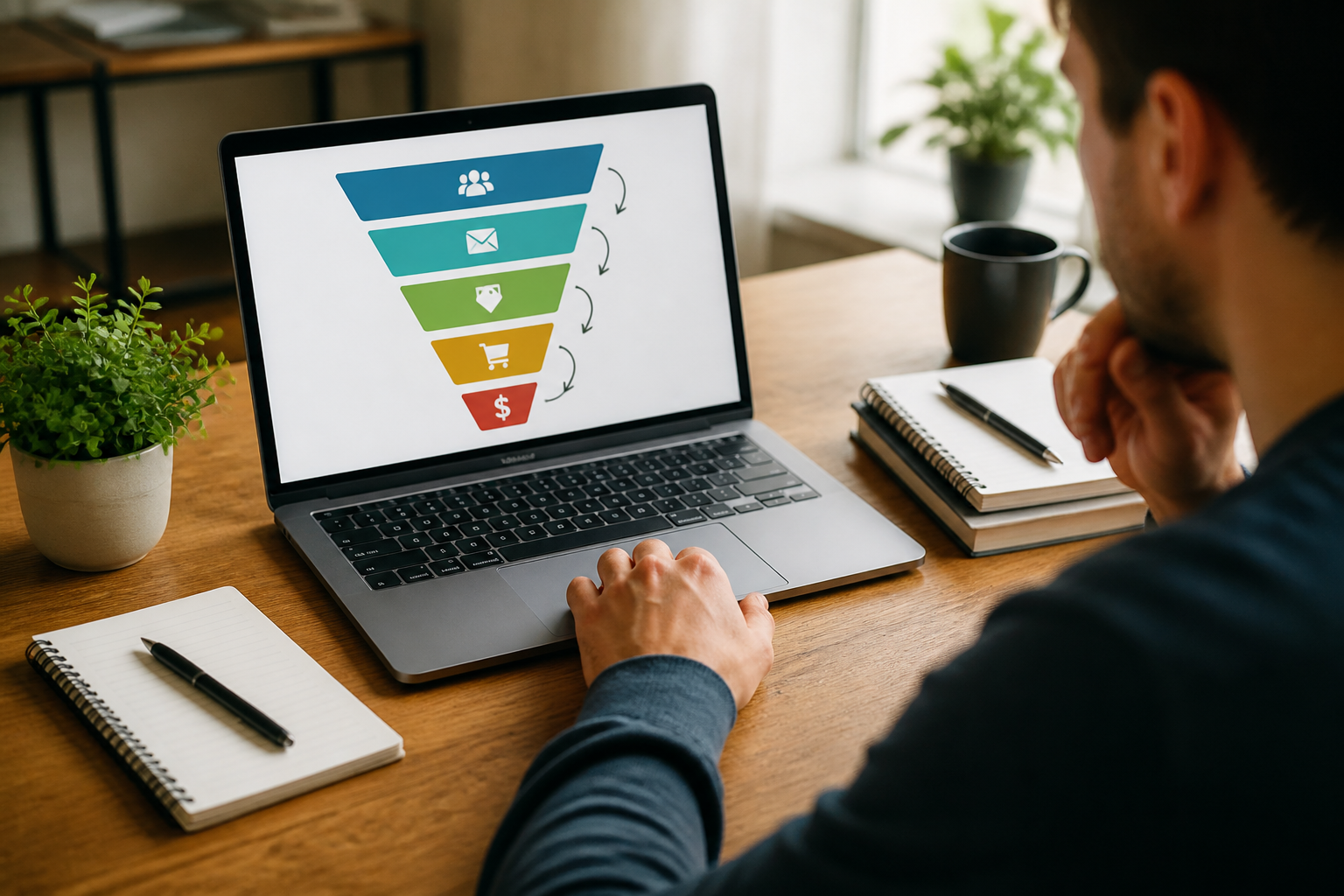
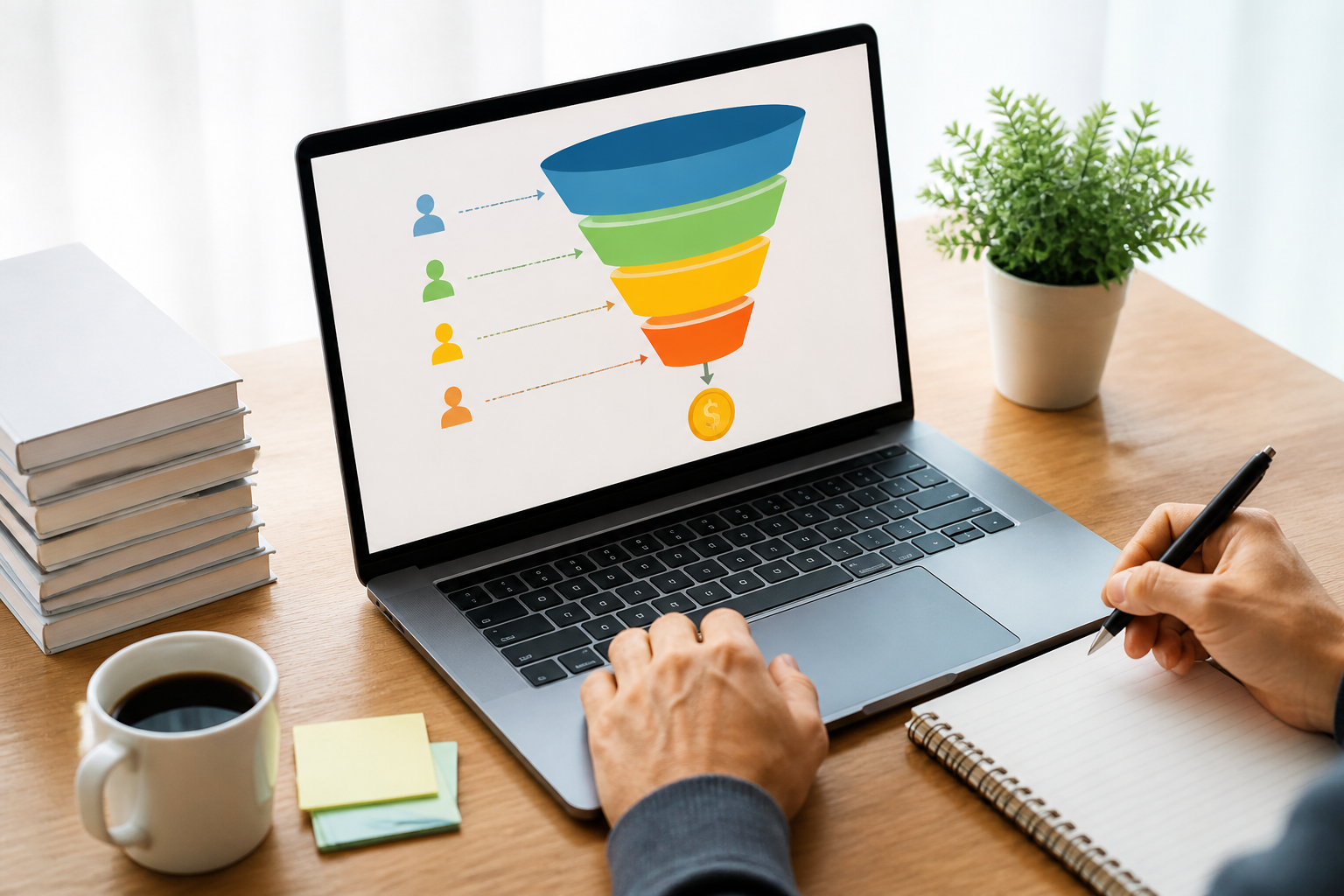
A basic PLR funnel can contain five stages: traffic, opt-in, nurture, sales page, and checkout or follow-up. Each stage has a distinct purpose.
Traffic attracts suitable people through educational posts, partnerships, search visibility, advertisements, or an existing audience. The message should match the lead magnet’s subject. Sending broad traffic to a narrowly framed offer increases wasted attention and may produce misleading performance data.
The opt-in page exchanges contact permission for a specific resource. Its headline should emphasize an outcome, while supporting copy clarifies the contents and intended user. Include a visible call to action and remove distracting navigation when appropriate.
The nurture sequence builds understanding and trust. The sales page explains the paid solution. Checkout reduces uncertainty about payment, delivery, access, and support. Follow-up addresses interested people who did not purchase and helps new customers begin successfully.
Use One Consistent Message
Repeat the central promise with variation, not contradiction. If an advertisement promises a thirty-minute planning method, the landing page should explain that method, and the email sequence should demonstrate why it matters. Changing the promise at every stage makes prospects work too hard to understand the offer.

Map the path on one page before writing. For each stage, note the prospect’s question, your answer, and the next action. This simple map exposes missing information, unnecessary clicks, and mismatched expectations.
Write Emails That Move the Decision Forward
A useful sequence often includes delivery, education, proof or demonstration, objection handling, offer presentation, reminder, and onboarding messages. The exact number depends on the buying cycle and audience. More emails are not automatically better; each message should earn its place by answering a question or helping the reader act.
The delivery email provides the lead magnet and suggests one immediate exercise. An education email explains a common problem and why typical attempts fail. A demonstration email walks through a small section of your method. An objection email addresses concerns such as time, technical ability, cost, or uncertainty about applying the material.
When presenting the offer, explain the transformation, contents, format, access, and appropriate use. Describe bonuses only when they improve the main result. A reminder can summarize the decision and point to the sales page without using artificial scarcity. If a deadline is real, state what changes and when. If no genuine deadline exists, do not invent one.
Write subject lines that accurately represent the email. Segment where practical. Someone who downloaded a budgeting checklist may need different examples from someone who purchased a template bundle. Personalization should improve relevance, not merely insert a first name.
Build a Sales Page That Answers Buying Questions
A sales page does not need dramatic language; it needs clear evidence that the product fits the reader’s problem. Start with a headline describing the result and audience. Follow with a short explanation of the current difficulty and the cost of leaving it unresolved. Then show how the product helps.
Describe the deliverables precisely. List modules, files, worksheets, templates, formats, and access instructions. Explain what customers can do after using them. If buyers receive editable documents, state which formats are included. If the product requires particular software or knowledge, disclose that before purchase.
Address Objections Without Pressure
Prospects may wonder whether the product is suitable for beginners, whether they can customize it, how long implementation takes, or whether support is available. Answer these questions near the relevant section. Clear limitations increase credibility. For instance, say that the product provides planning tools but does not guarantee business revenue.
Use demonstrations instead of unsupported praise. Show a page from a worksheet, describe a before-and-after workflow, or provide a sample lesson. Testimonials can help when they are genuine, permission has been obtained, and the wording accurately reflects the customer’s experience. Never manufacture endorsements or imply results that have not been established.
Include a concise guarantee only if you can honor its terms and have checked applicable requirements. State the refund period, process, and any conditions plainly. The call to action should tell readers exactly what happens after clicking.
Price, Package, and Position the Offer
Pricing should reflect usefulness, transformation, support, delivery costs, and the expectations of your market. Do not assume that a low price guarantees more sales. An extremely low price can signal low quality, while a high price requires stronger proof and a more substantial experience.
Offer one main package before adding choices. If you provide tiers, make their differences obvious. A basic version might include the core guide and worksheets; a higher tier might add implementation videos, editable assets, or a group session. Avoid adding bonuses simply to increase the item count. Each component should reduce a relevant obstacle.
Position the PLR foundation as a customized solution, not as untouched resale material. Customers care about the outcome and usability, but transparency still matters where licensing or authorship affects their expectations. Describe what you created, adapted, or included accurately.
Track the Funnel and Improve It Methodically
Set up measurement before sending significant traffic. Track visitors, opt-ins, email engagement, sales page visits, purchases, refunds, and customer activation. These numbers answer different questions. A low opt-in rate may indicate a weak lead magnet or unclear page. Strong opt-ins but few sales may indicate poor alignment, insufficient education, confusing pricing, or a sales page that leaves objections unanswered.
Change one major variable at a time when possible. Test a headline, call to action, page layout, price, or email angle, then observe enough activity to make the comparison meaningful. Avoid declaring a winner from a tiny or irregular sample. Performance can change because of audience source, season, device, or message context.
Watch behavior, not just totals. If visitors leave before seeing the offer, improve the opening and page speed. If many reach checkout but abandon, clarify payment, delivery, guarantee, or technical details. If customers buy but do not use the product, improve onboarding, simplify the first task, and make the quick win visible.

Use Customer Questions as Research
Questions from support emails, refunds, comments, and conversations reveal gaps in the funnel. Group them by theme: suitability, implementation, value, technical requirements, and trust. Add answers to the page or sequence where they are most useful. This creates a feedback loop based on actual confusion rather than assumptions.
Respect privacy and consent when collecting or using customer information. Provide accurate unsubscribe options, protect account details, and follow applicable rules for commercial messages and data handling. A funnel that converts through misleading claims or unwanted communication creates avoidable business and reputational risk.
Common Mistakes That Reduce Conversions
One common mistake is choosing PLR because it is inexpensive rather than because it solves a defined customer problem. Another is publishing the material unchanged, leaving generic examples and awkward branding that weaken confidence. A third is building a complicated funnel before validating the offer.
Unclear licensing creates legal and operational risk. Unsupported income claims can attract the wrong audience and undermine trust. Too many unrelated bonuses make the purchase decision harder. A long form, broken download, slow page, or confusing checkout can waste qualified interest.
Avoid treating every subscriber as ready to buy. Some need education, while others need a direct offer. Use respectful segmentation and let people control communication preferences. Finally, do not stop at the first sale. Onboarding, support, and product improvement influence refunds, recommendations, and future purchases.
A Practical Launch Sequence
First, select a narrow customer and define the product promise. Second, review the PLR license and audit the material. Third, transform the content with useful customization, examples, templates, and quality checks. Fourth, create a lead magnet that solves an early part of the same problem.
Fifth, write the opt-in page and delivery email. Sixth, map and write the nurture sequence. Seventh, build the sales page, checkout, confirmation, and onboarding experience. Eighth, test every path as a customer on both desktop and mobile devices.
Ninth, invite a small, relevant audience or run a controlled promotion. Record questions, technical issues, opt-ins, purchases, and activation behavior. Tenth, make informed adjustments before increasing traffic. This sequence protects time and budget because it prioritizes message fit and usability before scale.
Frequently Asked Questions
Can I sell PLR without changing it?
The answer depends on the license, but unchanged material usually gives you little differentiation. Review the permitted uses and improve the product where allowed. Editing structure, examples, design, exercises, and implementation guidance can make the offer more relevant while preserving compliance.
What should my first funnel include?
Start with an opt-in page, lead magnet, delivery email, short nurture sequence, sales page, checkout, and onboarding message. Add complexity only when a clear problem requires it. A simple, tested path is usually more valuable than several unmeasured branches.
How long should the email sequence be?
There is no universal ideal length. Use enough messages to deliver the resource, teach the problem, demonstrate your approach, present the offer, address objections, and support a decision. Stop repeating yourself. Monitor unsubscribes, replies, clicks, purchases, and questions, then adjust.
Should I offer a discount?
A discount can help test price sensitivity, but it should not replace value communication. If used, define the eligibility and duration honestly. Consider offering an additional implementation resource instead of reducing price when that better supports the customer’s result.
What if the funnel gets leads but no sales?
Check alignment first. Confirm that the lead magnet attracts the same people who need the paid product. Then review the offer, page clarity, proof, objections, price, checkout, and follow-up. Ask subscribers a neutral question about what prevented purchase; their answers may reveal a missing feature or misunderstanding.
Do I need paid advertising?
No. You can begin with an existing audience, partnerships, useful content, or direct outreach that respects permission and platform rules. Paid traffic can accelerate testing, but it also magnifies weak messaging. Validate the funnel with suitable visitors before increasing advertising spend.
How can I make a PLR offer trustworthy?
Be precise about what is included, show the product, disclose limitations, use genuine evidence, provide reliable delivery, and make support expectations clear. Trust grows when the experience after purchase matches the promise before purchase.
Conclusion
A converting PLR funnel is built through alignment, transformation, and disciplined improvement. Choose a focused problem, verify your rights, upgrade the material, and create a lead magnet that naturally leads to the paid solution. Then connect each funnel stage with one consistent promise, answer buying questions directly, and measure where prospects hesitate.
Conversion is not produced by pressure or decorative design. It comes from making a suitable offer understandable, credible, and easy to use. Treat customer questions as guidance, protect consent, test responsibly, and improve the product after launch. When the funnel helps people make a confident decision and achieve a practical first result, PLR becomes a foundation for a durable, customer-centered business rather than merely recycled content.